

High Output Alternators
As onboard electrical demands continue to increase, factory alternators are often no longer sufficient to support modern battery systems, especially with lithium, inverters, and higher daily loads. High output alternators provide a reliable way to generate substantial charging current directly from the engine, reducing generator runtime and improving overall system performance.
At Sea & Land Yacht Works, we design and install high output alternator systems that are properly matched to your vessel, engine, and battery bank to ensure safe, controlled, and efficient charging.
Why Upgrade?
A properly designed high output alternator system allows you to:
-
Rapidly recharge lithium and large house battery banks
-
Reduce reliance on generators and shore power
-
Charge consistently while underway
-
Support modern onboard electrical loads
-
Improve overall system efficiency
Efficient Use of engine Power
Most engines operate well below their maximum output during normal use, leaving available capacity unused. A high output alternator allows you to convert that available engine power into usable electrical energy, reducing the need to run a separate generator.
Custom Integration
High Output alternators require proper system design to ensure reliability and longevity. We account for battery type, charge rate, engine configuration, belt load, and integration with other charging sources such as solar and shore power.
For lithium systems, we incorporate appropriate regulation and protection to prevent overheating and ensure long-term performance.
Custom Mounting & Dual Alternators
We design and fabricate custom alternator brackets to ensure proper alignment, load handling, and serviceability.
For higher demand systems, we also install dual alternator setups, allowing for increased output, system redundancy, and dedicated charging of house and starting banks.
Installation
Our installations include:
-
Alternator mounting and alignment
-
Custom bracket fabrication when required
-
Belt system evaluation and upgrades
-
Proper cabling and circuit protection
-
Regulator setup and configuration
-
System testing under load
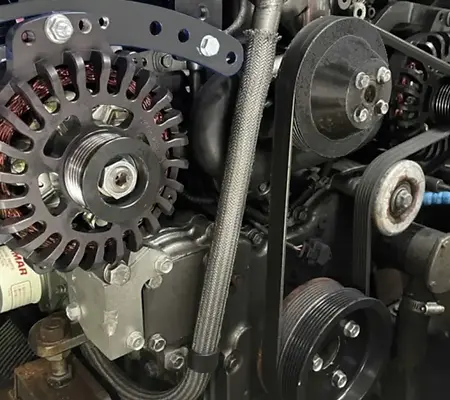
Is Your Marine Alternator Up to the Job?
Many marine engine alternators are inadequate to handle the charging demands of modern boats. Typically derived from automotive designs, these alternators struggle to perform effectively when paired with large deep-cycle battery banks, falling short as a reliable charging solution. While high-output alternator options exist that can meet these demands, they are seldom straightforward drop-in replacements.
If your current alternator is falling short, here are the key considerations for choosing a high-output alternator and how you can optimize its performance.
Click the link below to go to the Soundings Magazine article written by Sea & Land Yacht Works.


